A French drain is a good answer to a specific question. Sold as an answer to every question, it disappoints, and it disappoints expensively, because you have paid for a trench that was never going to help.
Here is how to tell whether yours is the right job.
It will help if…
Your yard slopes toward the house. Water arriving at the foundation from uphill can be intercepted before it gets there. This is the classic case, and a drain placed above the house does exactly what it should.
A neighbouring property drains onto yours. Same physics, less pleasant conversation.
You have a persistent low spot that holds water near the foundation. Standing water beside a wall is water being given hours to soak into the backfill.
Your downspouts discharge next to the wall and there is nowhere obvious to send them. A drain can take roof water and carry it properly away.
Your lawn stays soggy for days after rain. Saturated ground against a foundation is the mechanism behind most wall seepage.
It will not help if…
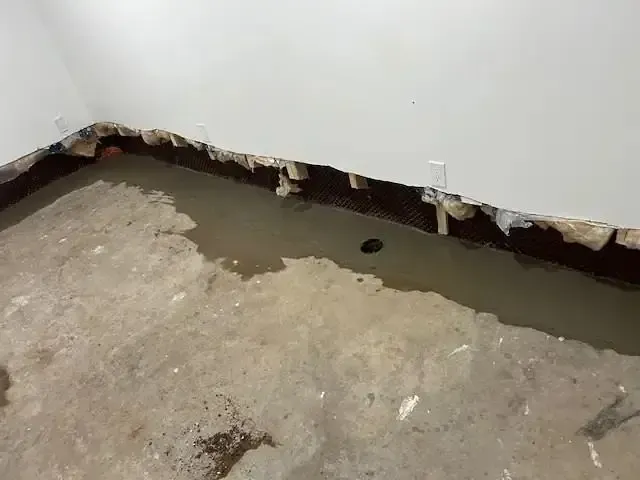
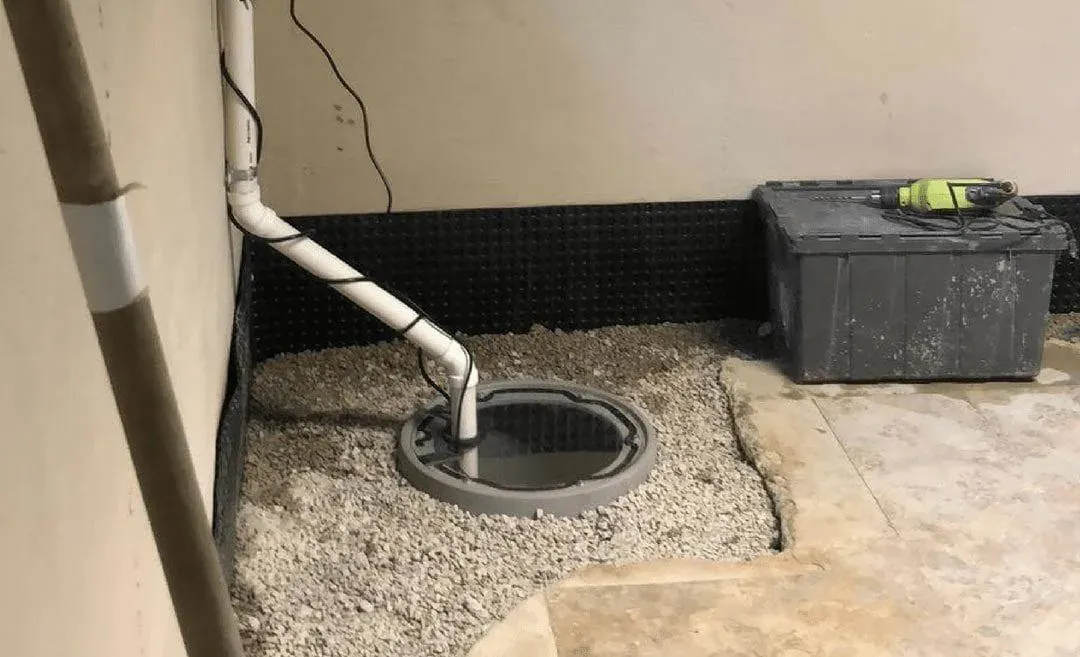
Water is rising through your basement floor. If the wet line follows the perimeter of your floor and the walls above it are dry, that is the water table above the underside of your slab, pushing up through the cold joint. A yard drain 60 cm deep does not touch a water table at footing depth. You need interior weeping tile.
Water is entering through a discrete crack in the wall. Fix the crack. A drain in the yard reduces the load but does not seal a hole through the concrete.
Your footing drain has failed. If the original weeping tile at the base of your foundation has silted closed, very likely in any Nova Scotia home built before about 1980, a shallow yard drain is not a substitute. It is drainage at the wrong depth for the problem.
There is nowhere for the water to go. On a flat lot with no lower ground, no permitted storm connection, and no room for a drywell, a gravity French drain becomes a linear puddle.
Building one that lasts
The construction sequence is not complicated, but every step in it is somewhere systems quietly fail.
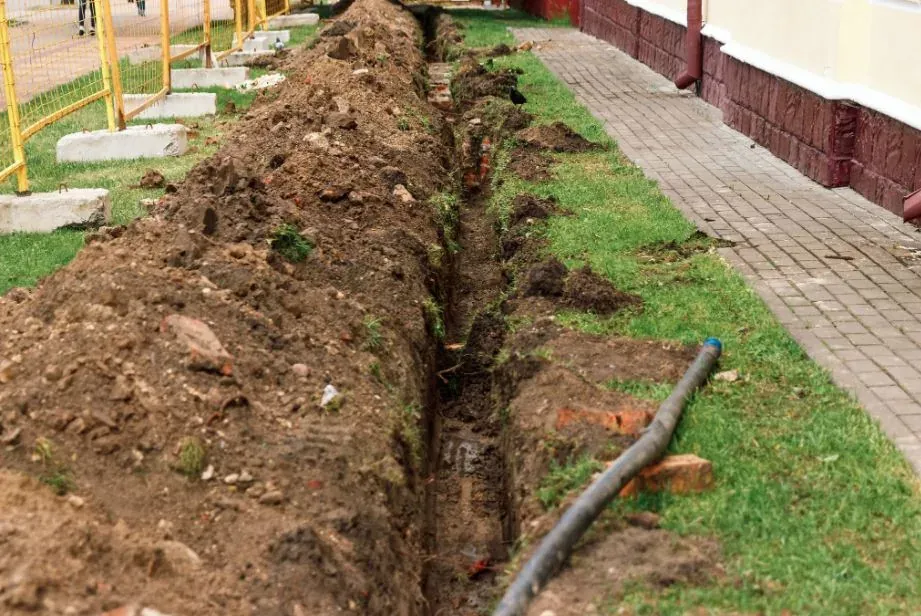
Grade the trench bottom first, to a continuous fall toward the outlet. No flat spots, no reverse pitch. A drain with a low point holds standing water permanently.
Line the trench with filter fabric. This is the step most often skipped and the reason most failed drains failed. Fabric keeps soil fines out of the stone’s void space, which is what actually moves the water.
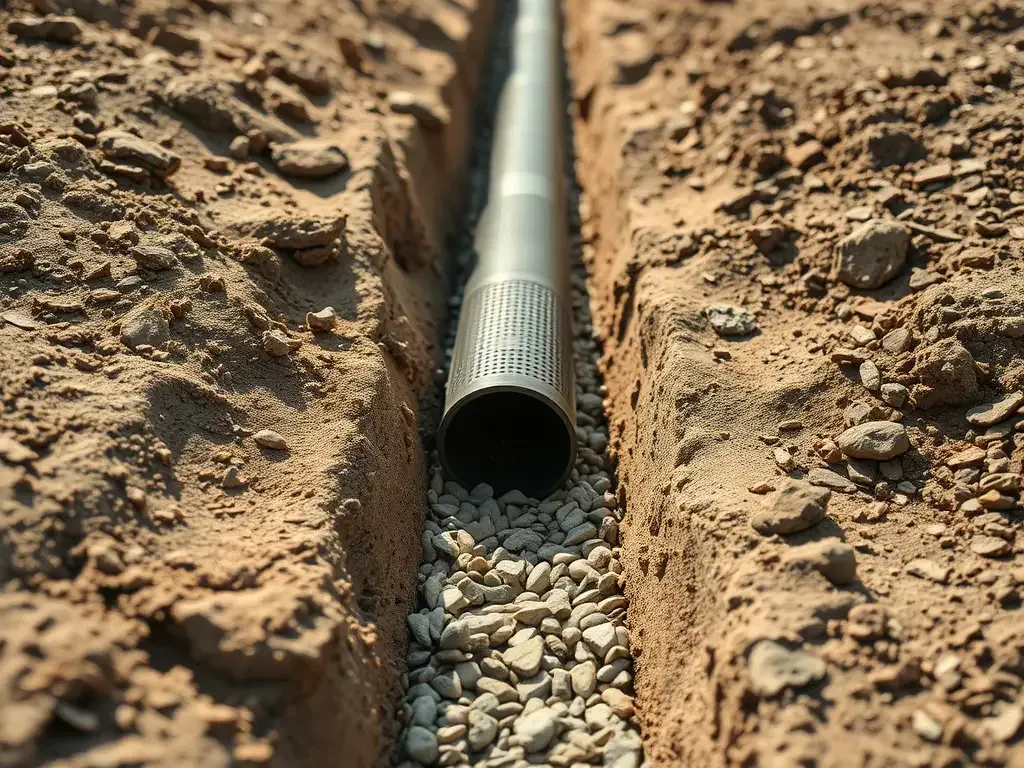
Bed the pipe in clean washed stone, not pit-run, not native soil. Washed stone has roughly a third of its volume as air. That air is the drain.
Lay perforated pipe with the holes facing down. Water enters from the stone bed around it, and holes facing down mean the pipe starts draining at the lowest water level rather than waiting for the trench to fill to pipe height. This gets reversed surprisingly often.
Cover with more stone, then fold the fabric over the top before backfilling.
Carry the line to a real discharge. To daylight where grade allows: the most reliable arrangement possible, because it has no moving parts and no dependence on power during the storm that causes the flooding.
The honest recommendation
If our assessment shows your basement takes water because your yard delivers it, we will quote you a drain, because that is the cheapest permanent fix available and it is the right one.
If it shows the water is coming up through your slab, we will tell you a drain will not help, even though it is the smaller, easier job to sell.
The assessment is free either way: request one here.
Written by the crew at Maritime Basement Waterproofing.
More advice →