A sump pump does not waterproof anything.
That is worth stating plainly, because it is the single most common misunderstanding we run into. A pump is the discharge end of a drainage system: the part that takes water your weeping tile has already collected and moves it out of the building. Installed without a system feeding it, it sits in a hole doing very little while water continues to enter everywhere else.
Installed as part of a properly built system, though, it is the component your dry basement depends on most, and it is the one most likely to fail.
How sizing actually works
Homeowners tend to shop by horsepower. Installers should be calculating total dynamic head: the real work the pump has to do.
A pump lifting water eight feet vertically and pushing it thirty feet horizontally delivers substantially less flow than the same pump lifting it four feet. Every pump has a performance curve, and the honest question is: at your lift and your run length, how many litres per minute does this specific pump actually move, and is that more than your basin receives during a bad storm?
Oversizing is a real problem too, not just a waste of money. A pump that empties the basin in two seconds short-cycles, starting and stopping constantly, and short-cycling is what burns out motors early. Correct sizing means the pump runs for a reasonable interval each time it starts.
The four details that decide whether it works
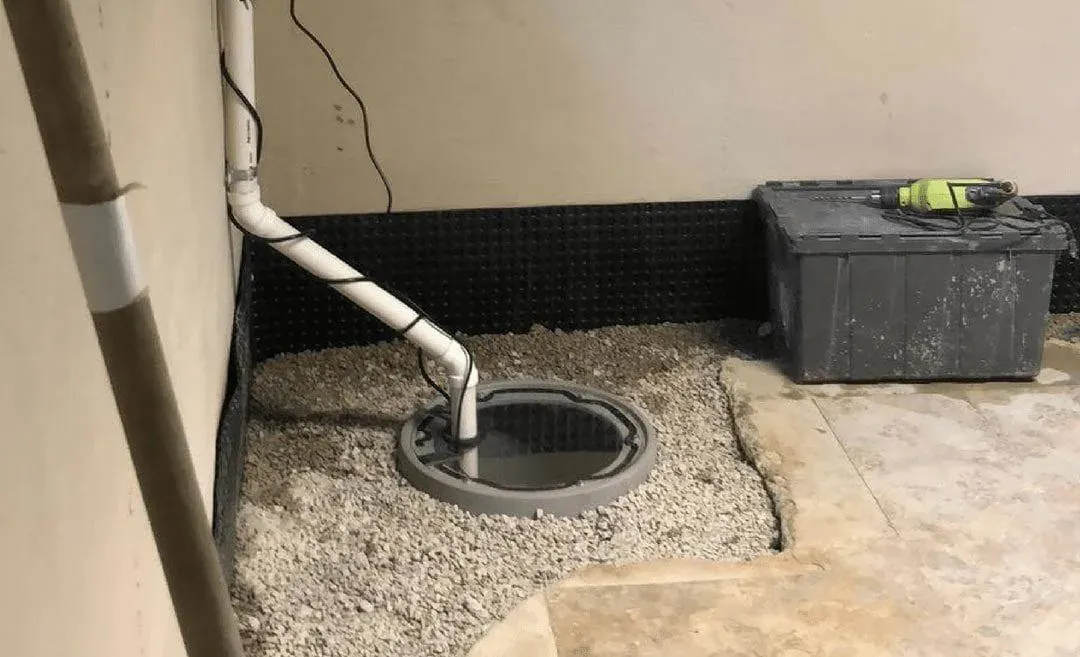
A sealed basin, not an open pit
An open sump is a continuously evaporating pool of groundwater inside your basement. It is a leading cause of the musty smell homeowners blame on their walls, and in parts of Nova Scotia with elevated radon it is a direct soil-gas entry point into your living space. A sealed lid with a gasketed access port and a proper vent costs very little more.
A check valve on the discharge
Without one, every time the pump shuts off, the column of water sitting in the discharge pipe runs straight back down into the basin. The pump refills, restarts, and lifts the same water again.
This is the most common cause of “my sump pump runs constantly,” and it is among the cheapest things on this page to fix. It wastes the pump’s service life and it never gets ahead.
Freeze relief on the exterior line
In an Atlantic winter, the exposed end of a discharge line can freeze closed. If it does, the pump dead-heads. It runs against a solid plug of ice until the motor burns out, and then your basement floods.
A relief fitting gives water somewhere to escape near the house if the main line is blocked. It is a small part that prevents total system failure, and it is routinely left off.
Discharge that actually leaves
A line that dumps three feet from the foundation puts the water straight back into the saturated soil your drainage system is trying to relieve. The pump then removes it again. Route it far enough away, downgrade, that it leaves for good.
And do not connect it to your sanitary sewer or a floor drain. It is prohibited under HRM and most Nova Scotia municipal bylaws, because storm water in the sanitary system overloads treatment plants and backs sewage up into other people’s basements. It can also expose you to a fine.
Battery backup is not an upsell
Consider the sequence in a typical Nova Scotia storm.
A post-tropical system arrives. It drops 80 to 150 mm of rain over several hours, saturates the soil, and drives the water table up. At the same time, wind brings down limbs and the power goes out, sometimes for a day or more.
Your basement is now taking on the most water it will see all year, and your pump has no electricity.
A battery backup is a second pump mounted above the primary on its own float switch, wired to a deep-cycle battery kept on a maintainer. When the primary loses power or fails, the backup starts automatically and will typically run through a multi-hour outage of intermittent cycling. An alarm tells you it has engaged.
If you add one thing beyond the basics, add this. It is the difference between a system that works and a system that works when it matters.
When to replace
Seven to ten years is typical for a quality cast-iron pump. Less for a plastic big-box unit, and less again in a basement that cycles heavily.
Pumps rarely give warning before they fail. If yours is approaching ten years, or you simply do not know how old it is, replacing it on your schedule for a known price is far cheaper than replacing it at 2am during a nor’easter with four inches of water on the floor.
Signs worth acting on: constant cycling, unusual noise, visible rust on the housing, a float that sticks, or a basin that fills faster than it empties.
What to have checked
When we look at an existing pump we check the pump itself, but also the four things that cause more floods than pump failure does: the check valve, the float travel, the basin seal, and the discharge routing. Any one of them can defeat a perfectly good pump.
More detail on what we install: sump pump installation.
Written by the crew at Maritime Basement Waterproofing.
More advice →