Interior Solutions
Interior Weeping Tile
When water comes up at the joint where your floor meets your wall, sealing the wall does nothing. Interior weeping tile intercepts that water under the slab and removes it.
Priced by linear foot · Free measured quote
What you get
- Relieves the hydrostatic pressure that pushes water through your floor
- Installed from inside, no excavation, no damage to landscaping or driveways
- Works year-round, including through Nova Scotia winters
- Washed stone wrapped in filter fabric, so the system does not silt closed
The problem interior weeping tile solves
Most homeowners assume a wet basement means water is coming through the walls. Often it is coming up from below.
Your basement floor is a slab poured on top of the footing, not bonded to it. That seam, the cold joint, runs around the entire perimeter of your basement, and it is not watertight. When the groundwater table rises after heavy rain or spring melt, water under your slab has nowhere to go but up, and the cold joint is the path of least resistance.
The signature is unmistakable once you know it: a wet line following the perimeter of the floor, dry walls above it, and water that appears hours after the rain rather than during it.
No amount of wall sealing, paint, or crack injection will touch this. The water is not coming through the wall. It is coming under it.
What we install
An interior perimeter drainage system does three things at once: it gives subsurface water somewhere to go, it relieves the pressure pushing that water upward, and it captures any seepage coming through the wall above.
The parts that matter:
- Clean washed stone. The stone bed is the real drain. It has far more void space than the pipe and it is what actually moves the water. Crews who bed pipe in native soil or pit-run gravel to save money build systems that silt closed within a few years.
- Filter fabric. Wrapping the stone keeps fines from migrating in and clogging the void space. This single detail is the difference between a system that lasts decades and one that fails in five years.
- Perforated pipe, properly sloped. Pipe carries water quickly to the basin once the stone has collected it.
- Dimple board up the wall. An air gap membrane against the wall means seepage through the concrete runs down behind it and into the stone rather than out onto your floor. It also lets the wall dry inward, which is why finished walls built over dimple board do not grow mould.
- A sealed sump basin. Sealed matters. An open pit is a continuous source of humidity and, in some Nova Scotia homes, a radon entry point.
Why we excavate beside the footing, not under it
This is the part that separates a proper installation from a dangerous one.
The footing is the wide concrete pad your foundation wall sits on, and it carries the entire load of the house. The drain must sit beside it, at or slightly below the top of the footing, in undisturbed soil. Digging beneath a footing to place pipe removes the bearing soil that holds your house up.
It happens more often than it should, because it is faster. We do not do it, and our own crews are on every job rather than a rotating subcontractor.
Pairing it with a sump pump
An interior system needs somewhere to discharge. Where the lot slopes away from the house it is sometimes possible to run to daylight by gravity, which is the most reliable arrangement because it has no moving parts. Most Nova Scotia basements need a sump pump, and on any system we install we recommend a battery backup: the storm that floods your basement is the same storm that takes the power out.
Jobs like this
Interior Weeping Tile in practice
High-Capacity Sump System, Truro
A floodplain property near the Salmon River, given pumping capacity sized for real flood volume rather than nuisance seepage.
DartmouthInterior Perimeter Drainage, Dartmouth
A split-entry taking water at the floor-wall joint every spring, resolved with a full interior system and battery-backed pump.
Questions
About interior weeping tile
Why install weeping tile inside instead of outside?
Exterior weeping tile is the stronger system in principle because it intercepts water before it reaches the foundation. But it requires excavating the full perimeter to footing depth, which means removing decks, walkways, driveways, gardens, and sometimes working within inches of a property line. On many Nova Scotia lots that is either impossible or several times the cost. Interior weeping tile achieves a permanently dry basement without touching the exterior, and it can be installed in any season. Where both are viable we will price both and explain the trade-off honestly.
Does cutting the floor weaken my foundation?
No. The channel is cut in the slab, which is a non-structural floor poured on top of the footing. It carries no building load. We excavate beside the footing, never beneath it. Undermining a footing is a genuine risk with unskilled crews, and it is one of the reasons we do not subcontract this work.
How much mess does this make?
Concrete cutting creates dust and noise for the first day. We use containment sheeting and vacuum-assisted cutting to keep it in the work area, and we haul out all spoil and old concrete. Most homeowners stay in the house throughout. You should plan to have the basement itself empty along the perimeter before we arrive.
Will I hear the sump pump running?
Occasionally, and much less than you would expect. A sealed basin lid dampens most of the sound, and a quality pump on a properly sized basin runs in short cycles rather than continuously. If the pump is near a bedroom we can specify a quieter unit and add isolation on the discharge line.
What happens in a power outage?
That is exactly when you need it most, since storms cause both the flooding and the outage. We strongly recommend a battery backup pump on any interior system. It is a second pump on a deep-cycle battery that takes over automatically and will run for hours without grid power.
Further reading
More on interior weeping tile
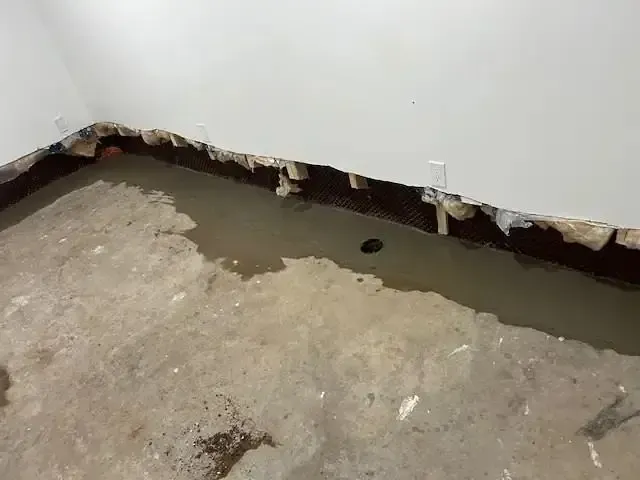
Wet Basement Solutions in Halifax: Start With the Source
How to work out why a Halifax basement is wet (wall seepage, floor-joint water, or surface runoff), and which fix each one actually needs.
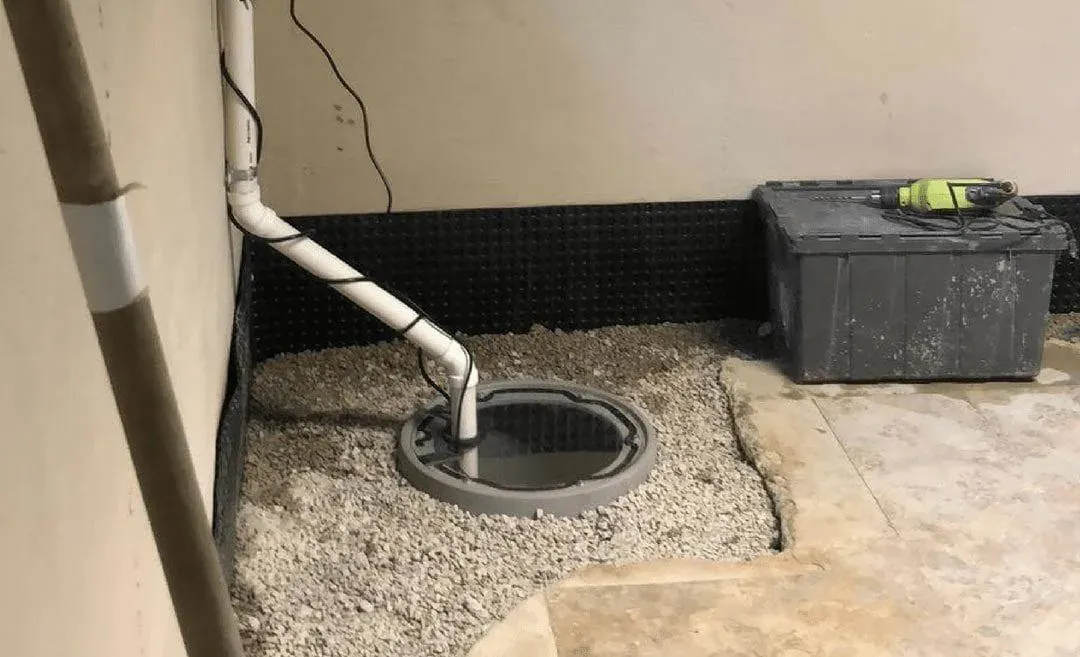
Sump Pumps in Nova Scotia: Sizing, Backup and Discharge
How sump pumps are sized, why the check valve matters more than horsepower, and why battery backup is not optional in an Atlantic storm province.
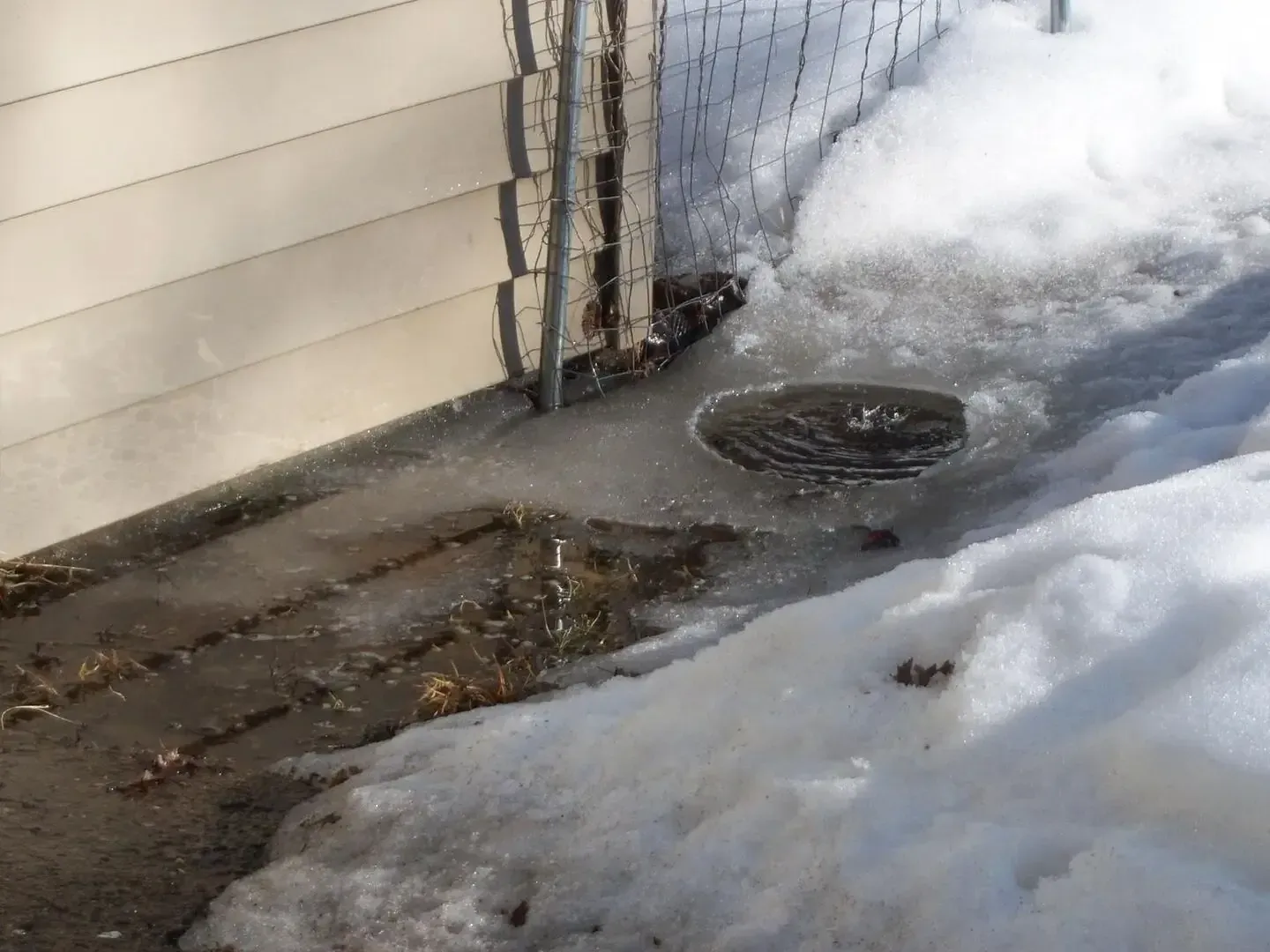
Should You Waterproof Your Basement in Winter? Usually, Yes
Interior waterproofing carries on through a Nova Scotia winter, and booking it then means you are dry before spring melt, with a far better spot in the schedule.
Where we do this work
Interior Weeping Tile across Nova Scotia, Cape Breton included
Free assessment
Tell us what you’re seeing.
We’ll come out, diagnose it properly, and give you a written quote. No charge, and no pressure. If a cheaper fix will solve it, that’s what we’ll tell you.
(902) 440-1500