Exterior Solutions
French Drains & Yard Drainage
Sometimes the basement is not the problem. Sometimes the yard is delivering a few thousand litres of water to your foundation every time it rains.
Priced by linear foot · Often the lowest-cost fix
What you get
- Intercepts water uphill of the house instead of managing it at the wall
- Fixes standing water, soggy lawn, and ice sheets on walkways
- Often the cheapest real fix for a wet basement
- Combines with downspout extensions and regrading for a complete surface plan
Start above ground
Before recommending anything expensive, we look at where the water is coming from. On a meaningful share of the wet basements we assess, the water never came from the water table at all. It fell on the roof or the yard and was delivered to the foundation by grade.
Three things to look at on your own property, today, at no cost:
Downspouts. Where does each one discharge? An average roof sheds several thousand litres in one heavy Nova Scotia rainfall. A downspout ending 30 cm from the wall drops all of it into the soil directly against your foundation, where it saturates the backfill and pushes against the wall. Extensions are inexpensive and they solve a surprising number of problems outright.
Grade at the wall. The ground should fall away from the foundation: roughly 15 cm of drop over the first 2 m. Over decades, backfill settles and landscaping is added, and grade very commonly ends up flat or sloping back toward the house.
Low spots and flow paths. After the next heavy rain, go outside and look. Where does water pool? Which direction does it run? Does the neighbouring property drain toward yours? Water that stands anywhere near the foundation is water being given time to soak in.
What a French drain does
A French drain is a trench filled with washed stone containing a perforated pipe, positioned to intercept water upslope of whatever it is protecting. Water in the soil finds the stone, which offers far less resistance than surrounding soil, enters the pipe, and is carried away by gravity.
The system works because of the stone as much as the pipe. Roughly a third of a washed stone bed’s volume is air, which is why it can accept water so much faster than the ground around it.
Filter fabric is not optional. It lines the trench and folds over the top of the stone before backfill, letting water pass while keeping soil fines out of the void space. French drains that quietly stop working after a few years are almost always drains built without it.
The outlet decides everything
The most common French drain failure is not construction. It is that nobody established where the water was going before digging started.
A gravity drain needs an outlet at a genuinely lower elevation. On a sloped lot that is straightforward: the line runs to daylight somewhere downhill. On a flat lot it can be the hardest part of the job, and the honest options are a properly sized drywell, a permitted storm connection, or a pumped basin.
Two rules that are not negotiable: you cannot discharge onto a neighbouring property, and you cannot connect storm water to the sanitary sewer. HRM and most Nova Scotia municipalities prohibit the latter outright, because it overloads treatment plants and backs sewage up into other people’s basements.
We confirm the outlet before we quote the trench.
Related surface work
A complete surface water plan often includes more than the drain itself: downspout extensions carrying roof water well clear of the foundation, regrading to re-establish fall away from the house, a swale to redirect a flow path across the property, window well drainage where wells are collecting and holding water, and trench drains at driveways or walkout landings where runoff crosses hard surfaces.
It is unglamorous work, and it is frequently the cheapest permanent solution to a wet basement.
Jobs like this
French Drains & Yard Drainage in practice
Questions
About french drains & yard drainage
Will a French drain fix my wet basement?
It will if surface water is what is causing it. Where the yard slopes toward the house, where a neighbouring property drains onto yours, where downspouts discharge next to the foundation, or where a low spot holds water against the wall after every rain, a French drain removes the source and can dry the basement without touching the foundation at all. It will not help if water is coming up through the floor from a high water table, or in through cracks from saturated deep soil. The assessment establishes which you have, and we would much rather sell you a drain than an unnecessary excavation.
What is the difference between a French drain and a trench drain?
A French drain is a buried perforated pipe in a stone-filled trench. It collects water from the soil around and above it across its full length, which makes it right for saturated ground and diffuse surface runoff. A trench drain, or channel drain, is a surface grate set into hard surfaces (a driveway apron, a garage entry, a walkout landing), and captures water already running across pavement. Many properties need both: a trench drain at the hard surface, a French drain in the soft landscape.
Where does the water go?
This is the question that decides whether the project works, and it must be answered before any digging. The outlet must be at a lower elevation and must be somewhere the water can legally and reasonably go, to daylight on your own property at a lower grade, into a municipal storm system where a connection is permitted, or into a properly sized drywell. Discharging onto a neighbouring property is a liability issue, and connecting storm water to the sanitary sewer is prohibited under HRM bylaws. Where no gravity outlet exists, an exterior pumped basin is the alternative.
How deep should a French drain be?
It depends on what it is intercepting. A drain handling surface runoff and shallow saturation typically sits 45 to 60 cm deep. A drain intended to lower a water table around a specific area, or to protect a foundation wall, needs to sit deeper, sometimes near footing depth, at which point it is really foundation drainage rather than yard drainage. Depth is set by the job, not by a standard.
Do I need to fix my downspouts too?
Almost always, and it is the cheapest fix on this entire site. An average Nova Scotia roof sheds thousands of litres in a single significant rainfall, and a downspout discharging 30 cm from the wall puts all of it into the soil directly against your foundation. Extending downspouts a few metres away, onto grade that carries it off, resolves a meaningful share of the wet basements we are called out to look at. We will tell you if that is all yours needs.
Further reading
More on french drains & yard drainage
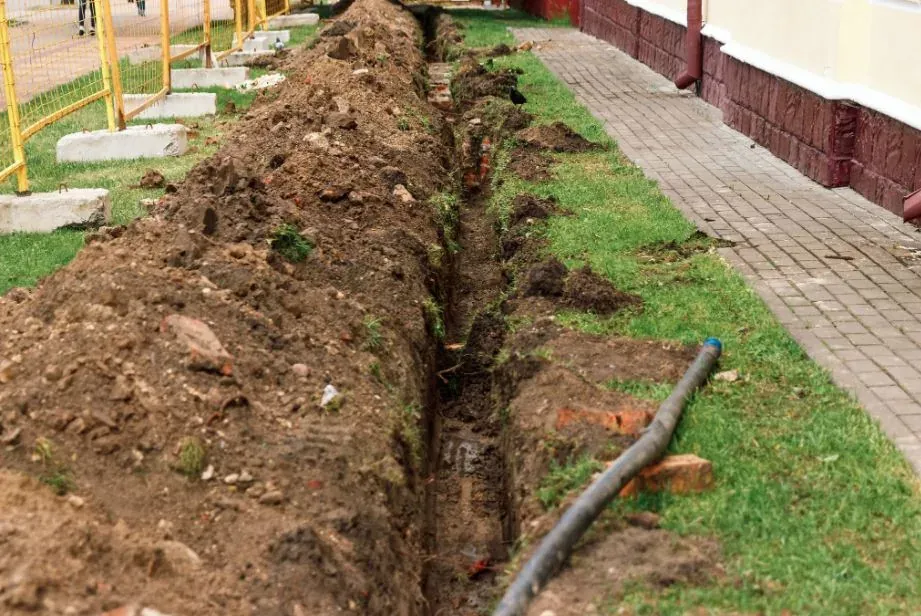
Yard Drainage Solutions for Halifax Homes
Standing water, soggy lawn, and runoff heading for the house. How to read where yard water goes, and the drainage that redirects it before it reaches concrete.
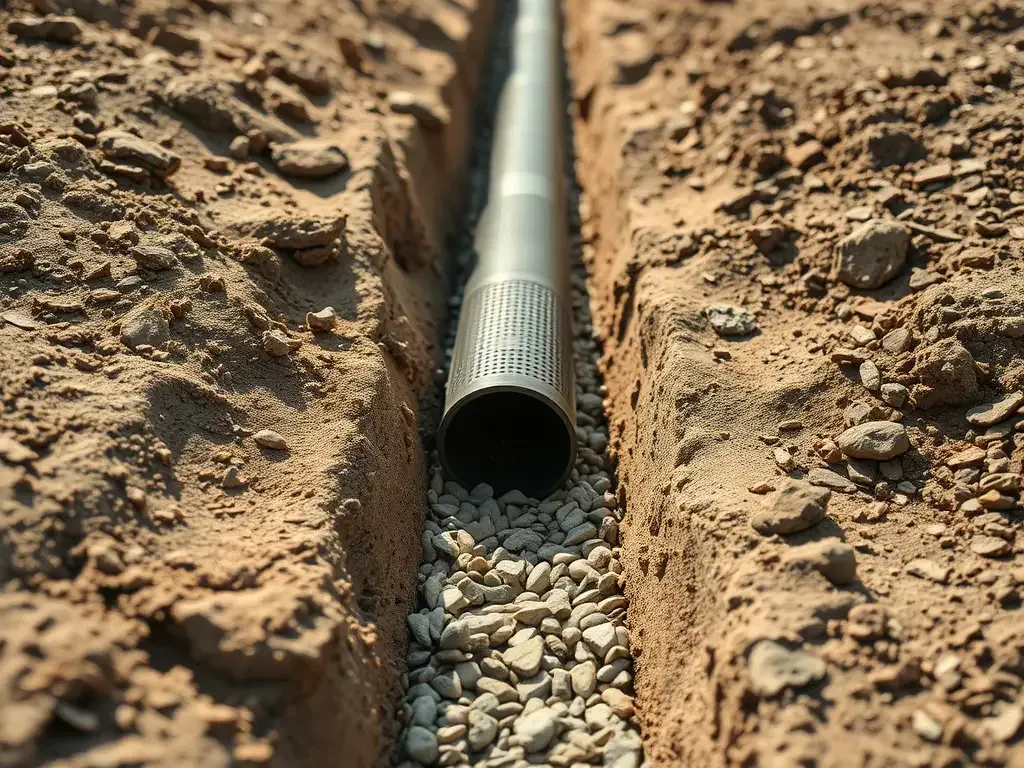
French Drains: When They're the Right Fix, and When They Aren't
French drains solve surface and near-surface water. They do nothing for a high water table under your slab. How to tell which problem you actually have.
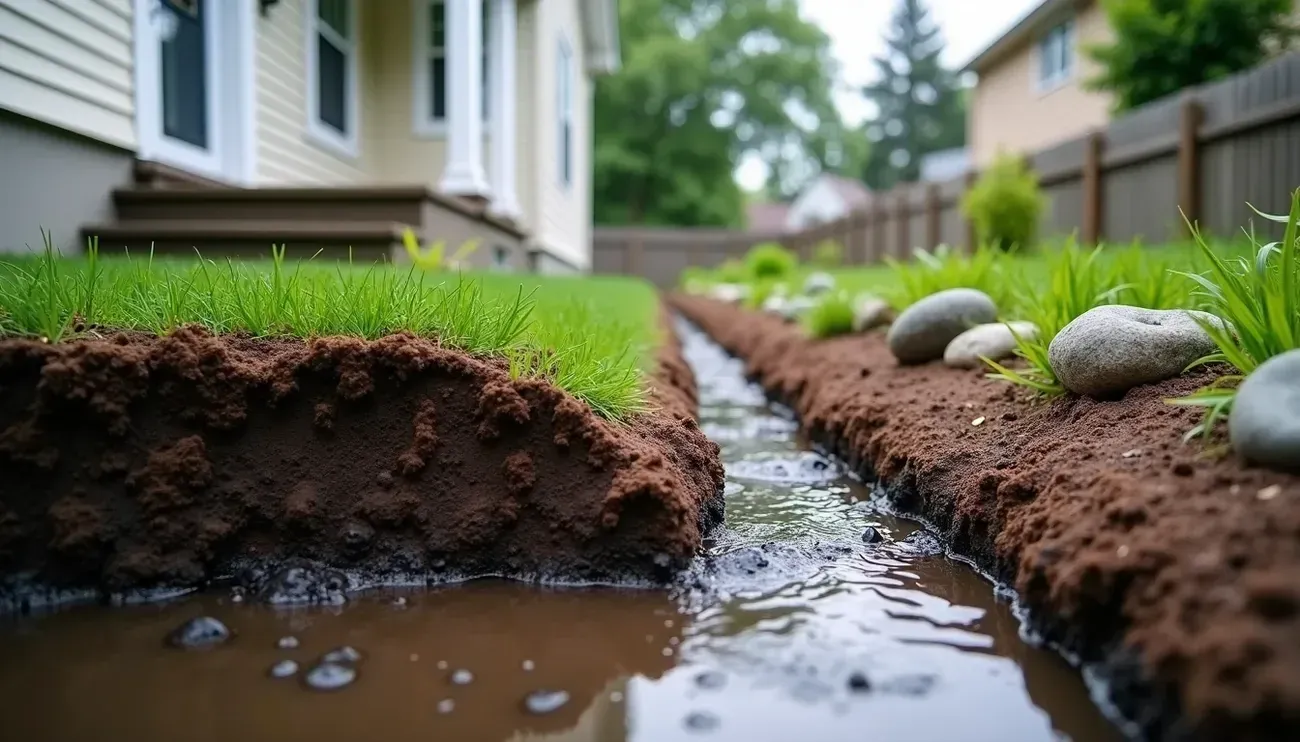
Atlantic Storm Season: Getting a Basement Ready
Post-tropical storms bring the rain and the power cut at the same time. What to check before the season, and why a grid-powered sump pump is not enough.
Where we do this work
French Drains & Yard Drainage across Nova Scotia, Cape Breton included
Free assessment
Tell us what you’re seeing.
We’ll come out, diagnose it properly, and give you a written quote. No charge, and no pressure. If a cheaper fix will solve it, that’s what we’ll tell you.
(902) 440-1500