If you have been quoted for crawl space encapsulation, the vapour barrier is the component the entire system depends on. It is also the easiest place to quietly save money on a quote, which is why it is worth understanding what you are being sold.
Builder’s poly is not a vapour barrier system
The thin clear polyethylene sheeting found in most older crawl spaces is builder’s poly, typically 6 mil, sold in rolls, and intended as a temporary construction material.
Three problems with it in a crawl space:
It tears. The first time anyone crawls across it to service a duct or chase a pipe, it punctures. A vapour barrier with holes in it is a decorative floor covering.
It degrades. Thin polyethylene becomes brittle over time, particularly where it contacts concrete and soil chemistry.
Its permeance is mediocre. Water vapour moves through material at a measurable rate: the lower the perm rating, the better the barrier. Standard poly is far more permeable than engineered products.
What an engineered barrier does differently
Stego Wrap is the best-known brand of engineered vapour barrier, and it has become a general shorthand the way “Gyprock” did for drywall. Several manufacturers make comparable products, and the characteristics that matter are the same across all of them.
Thickness and puncture resistance. Engineered barriers are typically 15 mil and up, with reinforcement, and they survive being walked and crawled on for decades.
A far lower perm rating. Materially less vapour passes through, which is the entire function.
Reliable seaming. These systems come with matched tape and detailing accessories, so seams, penetrations and terminations become genuinely continuous rather than merely overlapped.
Stability over time. They are formulated to remain intact against soil and concrete for the life of the building.
Why the details matter more than the sheet
A perfect membrane with sloppy detailing leaks at the details. Every time.
Seams need generous overlap and proper tape, not duct tape, which fails within a couple of years.
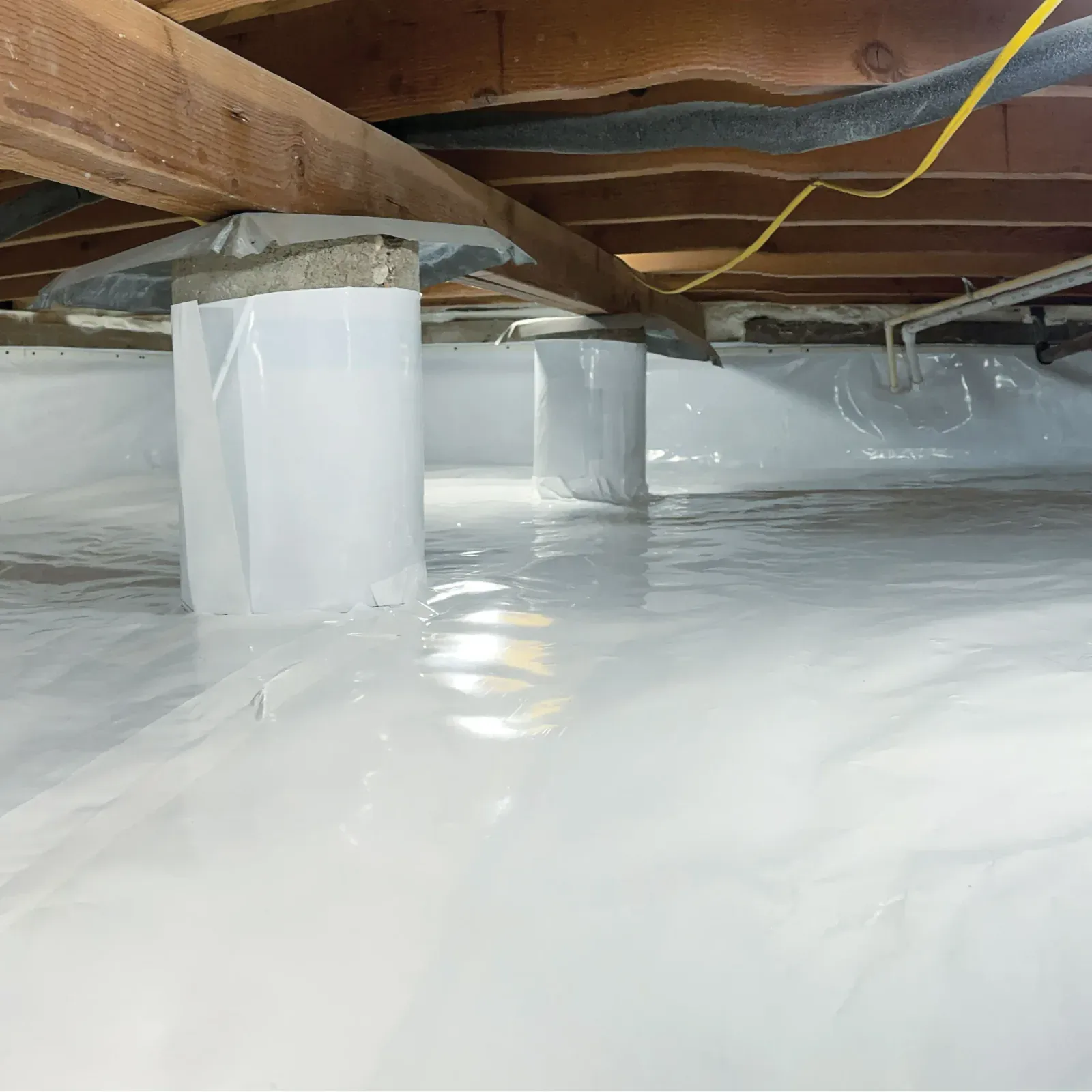
Wall terminations need the barrier carried up the wall and mechanically fastened near the top, then sealed. A barrier that stops at floor level leaves the wall as an open moisture path.
Piers and columns need the barrier wrapped up and sealed around them individually.
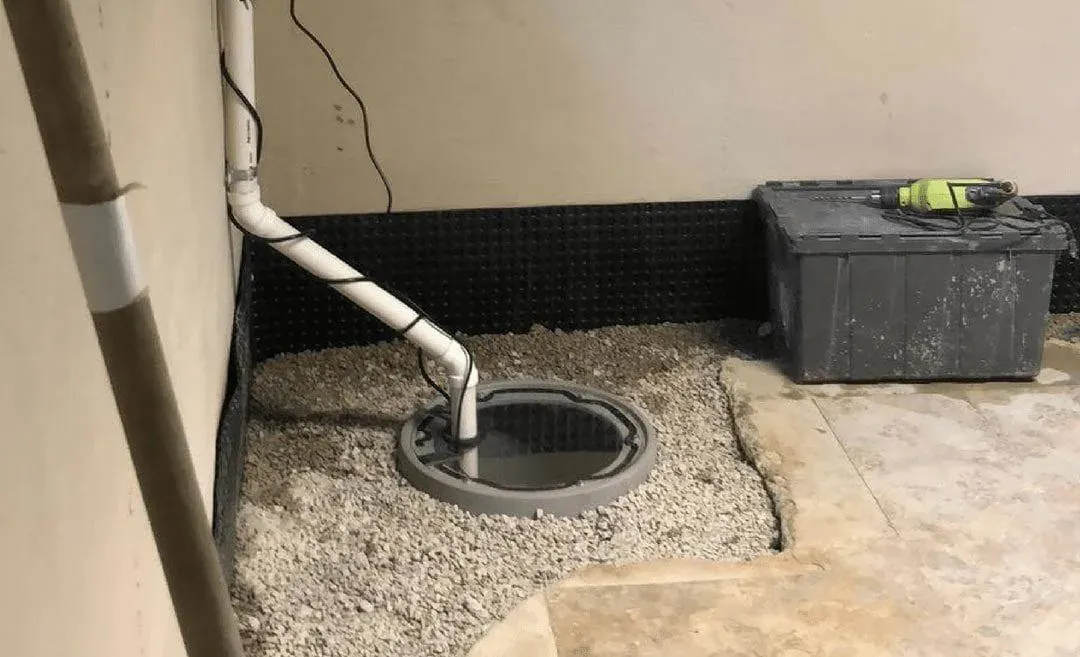
Penetrations (plumbing, wiring, ducts, the sump) each need sealing.
Watch for these when you compare quotes. Two encapsulation prices can differ substantially and both be honest, because one includes detailing the other leaves out.
What to ask for in a quote
- What is the thickness and perm rating of the barrier?
- Is it run up the walls and sealed, or only across the floor?
- How are seams sealed, and with what tape?
- Are piers, penetrations and the rim joist included?
- Is drainage included if there is standing water, or is the barrier going over an unsolved problem?
- Is a dehumidifier included, and where does its condensate go?
A quote that answers all six is a quote you can compare.
The order of operations
Barrier last, not first.
If water actively enters the crawl space, sealing it in traps it. Where there is a genuine water problem, perimeter drainage and a pump go in before any membrane. Getting this backwards is the most expensive mistake in crawl space work, because it means doing the whole job twice.
More on the full process: crawl space encapsulation.
Written by the crew at Maritime Basement Waterproofing.
More advice →